
Key Takeaways
- Spring maintenance finds weak parts before peak demand, which reduces emergency downtime in summer.
- A clean, tuned system runs more efficiently during the hottest months, which helps control operating costs.
- Scheduling early makes budgeting easier and keeps you from competing for appointments during the first heat wave.
Spring gives most Virginia businesses a much-needed break before the real heat sets in. Your HVAC system is not working overtime yet, which means you have a perfect window to catch and fix any issues before they become bigger problems in July. If you manage a storefront, office, restaurant, or warehouse in the Central Virginia area, scheduling spring maintenance is one of the simplest ways to avoid summer downtime, boost efficiency, and keep your budget on track.
Summer Downtime Costs More Than The Repair
When your commercial HVAC system goes down in the summer, it is more than just uncomfortable. It can hurt staff productivity, drive away customers, affect your equipment, and even put your inventory at risk. Restaurants and gyms notice the impact right away, while medical offices and retail stores may see fewer visitors and shorter stays. Even if the repair itself is quick, it is often the lost time that costs you the most.
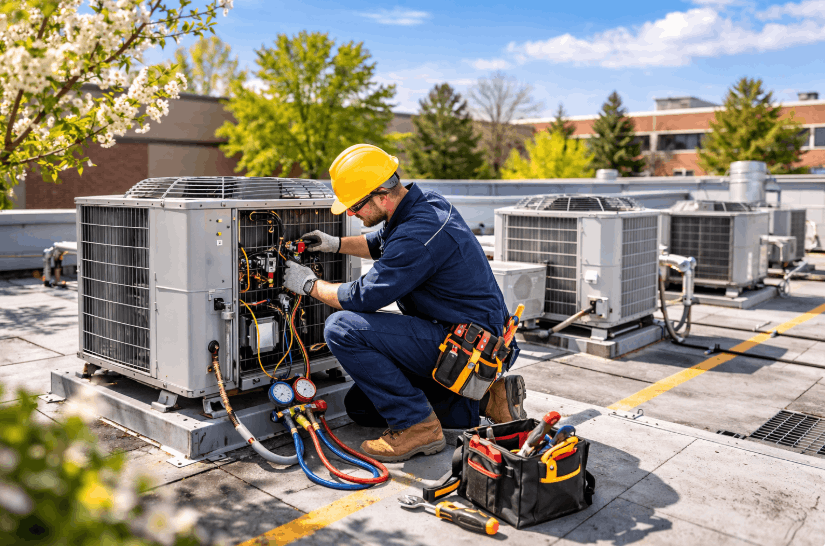
Spring is your chance to handle HVAC issues on your own terms, not when the weather forces your hand. A technician can check electrical parts, make sure airflow is right, clean coils, and fix any problems before your system is working its hardest.
Spring Maintenance Improves Energy Efficiency When It Matters Most
Your commercial HVAC system works its hardest when the weather heats up, and your building is full. If coils are dirty, belts are loose, or filters are clogged, your system has to run longer to keep things comfortable. That extra work can quickly drive up your energy bills.
A spring tune-up gets your system ready for summer by taking care of the basics. This means cleaning the condenser and evaporator, checking refrigerant levels, making sure the economizer works if you have one, confirming fan motors and belts are in good shape, and replacing filters on time. The U.S. Department of Energy recommends regular maintenance like this to keep your system running efficiently and to help prevent breakdowns when you need cooling the most.
Better Planning Means Better Budget Predictability
No one likes surprise expenses. By scheduling spring maintenance, you can spot and fix small issues before they turn into emergency repairs. This helps you plan for repairs or replacements ahead of time, so you are not left scrambling or facing unexpected costs.
This is especially important if you manage a multi-tenant building or have several rooftop units. Planning your service visits lets you spread out costs, focus on the most important units first, and avoid dealing with multiple breakdowns at the worst possible time.
Spring Scheduling Is Simply Easier
When the first big heat wave hits, everyone is calling for service, and it can be tough to get an appointment. By scheduling in the spring, you can book your service early, ask questions, and make decisions without feeling rushed.
If you run a business in Charlottesville, this scheduling advantage is real. The goal is to have your system tuned up and ready before you need it every day. Spring gives you the time to do just that.
What Commercial HVAC Maintenance Should Include
Not all tune-ups are created equal. A good commercial maintenance visit should be thorough and practical, with a focus on preventing problems before summer hits.
- Replace or confirm the filter schedule and check for bypass gaps.
- Inspect electrical connections, capacitors, contactors, and safety controls.
- Clean condenser coils and verify proper airflow across the coil.
- Check belts, pulleys, and fan operation where applicable.
- Confirm thermostat calibration and staging, and verify economizer function if installed.
- Measure temperature split and system performance to spot issues early
These checks are what most commercial building operators are encouraged to do in spring to lower the risk of problems during the busy season. You can also compare them to the broader preventative steps recommended by ASHRAE, which sets the standards for HVAC maintenance.
If you take care of these items in spring, you are much less likely to face an emergency call when your building is packed and the temperature is soaring.
A Mid-Season Breakdown Is Not Just Bad Luck
Most commercial HVAC problems give you warning signs first. Things like weak capacitors, low refrigerant, dirty coils, or poor airflow usually show up before the system stops working. The trouble is, these signs are easy to miss when you are busy running your business.
Spring maintenance helps you catch those warning signs and turn them into a plan of action. It is the difference between making a simple repair now or dealing with a major breakdown later, when you need your system the most.
Spring is your best opportunity to stay ahead of the heat. If you want to cut down on emergency calls, keep your staff and customers comfortable, and make your HVAC budget more predictable, schedule your commercial maintenance with The Otter Guys today. Just let us know what type of building you manage and how many units you have on our contact page, and we will help you create a plan that works for you before the busy season starts.