
Key Takeaways
- Spring rain and soil movement can stress older water lines, especially if they already have small cracks or weak joints.
- Sudden pressure drops, soft spots in the yard, or unexplained water bills often point to a buried leak.
- Repair can be the right move for a localized break, but recurring leaks, aging materials, and widespread corrosion often justify replacement.
- Early leak detection keeps yard damage smaller and reduces the chance of a full line failure.
Spring in Virginia is when the ground starts to wake up again. As the soil warms and the rain returns, all that compacted earth from winter begins to shift. Most of the time, this is nothing to worry about. However, if your home has an older water line or a line that was buried too shallow, these spring shifts can turn a small weak spot into a leak, a sudden drop in water pressure, or a muddy spot in your yard that just will not dry out.
If you want to avoid unexpected repairs, now is the perfect time to learn what warning signs to look for and when it makes sense to fix your water line before it turns into a bigger headache.
Why The Ground Shifts After Winter
Even in Central Virginia, winter brings freeze and thaw cycles that change soil structure. Water expands when it freezes and then settles when it melts. In spring, saturated soil adds another factor. When clay heavy ground absorbs water, it swells, and when it dries it shrinks. That push and pull can move enough to stress pipes, especially at joints, bends, and spots where the line crosses other utilities.
If your home has an older water line, a line that is not buried very deep, or has had repairs in the past, you are more likely to see problems when the ground starts moving again in spring.
How Spring Soil Movement Affects Water Lines
Your water service line is built to handle steady pressure all year long. But when the soil around it shifts, the line can flex. Newer materials are designed to handle this movement, but older pipes, corroded metal, or brittle sections are much more likely to crack or leak.
In the spring, water line problems usually show up in three main ways.
- A small crack widens, which causes a leak that slowly grows
- A joint shifts just enough to seep water, which leads to soft soil and pressure loss
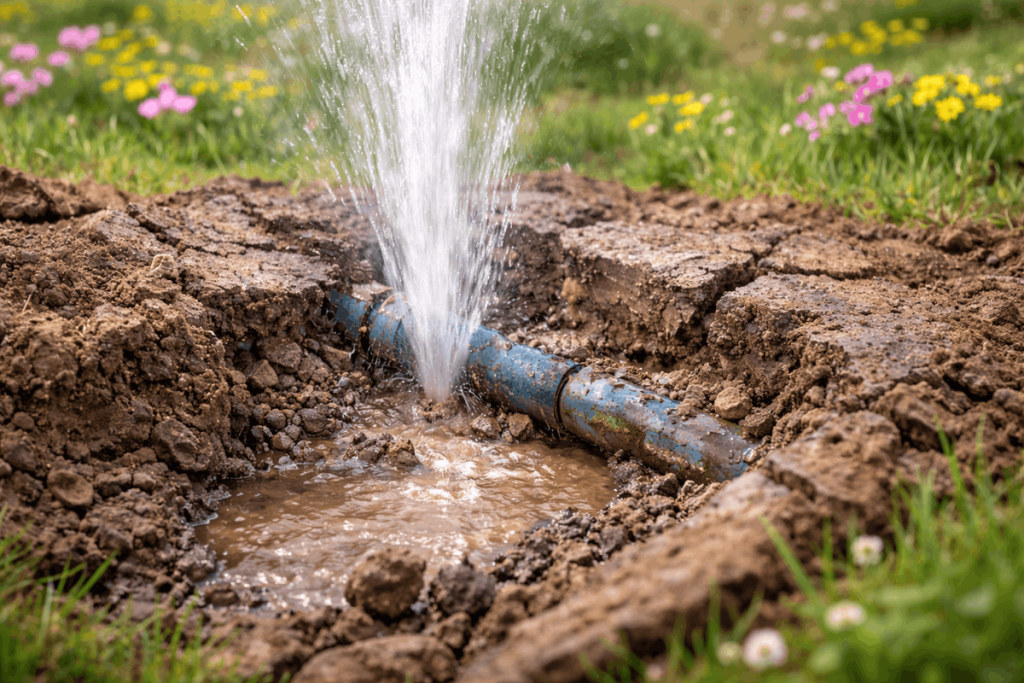
- A weak spot fails suddenly, which causes a bigger break and visible yard flooding
In all three cases, the warning signs can be easy to miss at first. That is why it is important to catch them early, before they become bigger issues.
The Most Common Warning Signs
Water line problems usually leave some clues behind. If you notice one of these signs, keep an eye on it. If you spot two or more, it is time to take action before things get worse.
- Pressure suddenly feels weaker at multiple fixtures.
- Toilets take longer to fill, and showers feel inconsistent.
- Your water bill spikes without a change in usage.
- You have a soggy patch in the yard, even when it has not rained recently.
- You see unusually green grass over one section of the line.
- You hear water moving when everything is off in the house.
The goal is not to panic, but to look for patterns and act quickly if you see more than one warning sign.
Repair Or Replacement: How To Think About The Decision
This is the big question for many homeowners: should you repair the break or replace the whole water line? A repair makes sense when the problem is truly localized, and the rest of the line is in good shape. That is often the case for a one-time break caused by a specific event, like a small soil shift, a root intrusion at one joint, or a single compromised fitting.
Replacement makes more sense when your water line is showing signs that it is reaching the end of its lifespan. Here are a few things to consider:
- The line is older and made from materials that corrode or restrict flow over time
- You have had multiple repairs over the last few years.
- The line is undersized or shows signs of internal buildup, and pressure is gradually trending down.
- Yard conditions make repeated digging more expensive than a one time replacement.
If you are not sure which option is best, our team can help you make the right call based on clear evidence, not guesswork.
The Otter Guys Can Help You Get Ahead Of Spring Water Line Problems
Spring is a good time to handle water line issues because the signs are easier to spot and the ground conditions often make access more manageable than mid winter. The Otter Guys can locate leaks, confirm what is happening with your pressure, and help you decide whether a repair is enough or whether replacement will save you money and headaches over time.
If you are noticing pressure drops, soggy spots in your yard, or a water bill that just does not add up, reach out to us for water line repair. We will handle the rest and help you get your home back to normal.
If spring ground shifts are making your water pressure unreliable or your yard mysteriously wet, do not wait for it to get worse. The Otter Guys can pinpoint the issue, explain your options clearly, and handle the repair or replacement with minimal disruption. Reach out through our contact pageand tell us what you are seeing, then we will help you protect your home before a small leak turns into a bigger problem.